
Scope of Our Accounting Services in Turkey
Celikel CPA delivers end-to-end accounting services in Turkey for foreign-owned businesses, Turkish subsidiaries, and corporate branches. We provide accurate bookkeeping, tax return filings, and compliant financial reporting.
Statutory Bookkeeping and Ledger Management
Financial Statement Preparation (TAS / IFRS)
Corporate Tax Compliance and Filing
Inflation Accounting and Period-End Adjustments
Additional Integrated Services
What Is Included in Monthly Accounting Services?
The engagement should distinguish recurring statutory accounting from specialist work. The final scope depends on the company’s activity, transaction volume, employees, electronic-document status and reporting expectations.
| Workstream | What the recurring service covers |
|---|---|
| Monthly statutory bookkeeping | Posting supported sales, purchase, bank, expense, fixed-asset and payroll records to the Turkish statutory books. |
| Tax filing workflow | Preparing the declarations that apply to the company’s actual taxpayer profile and maintaining a filing calendar. |
| Reconciliations and close | Bank, customer, supplier, payroll and tax-account reconciliations before the reporting pack is finalized. |
| Electronic systems review | Checking e-Invoice, e-Archive Invoice, e-Ledger and related requirements where applicable under current rules. |
| Management or group reporting | Mapping local records into an agreed monthly package for founders, finance directors or an overseas parent. |
Usually scoped separately
| Item | Why it is separate |
|---|---|
| Payroll processing | Can be coordinated with accounting but should be identified separately by employee count and payroll complexity. |
| Independent or statutory audit | A separate engagement where the company meets an audit requirement or requests assurance. |
| Tax controversy and historical cleanup | Tax inspections, litigation support, voluntary correction and reconstruction of old records require separate scoping. |
| Transfer pricing or specialist reports | Benchmarking, Local File, Master File, incentive and certification work is assessed separately. |
| ERP implementation | We can define accounting mappings and integration requirements; software licensing and technical implementation remain separate. |
What a Foreign-Owned Company Should Provide Each Month
A reliable close depends on a complete, agreed document flow. The checklist below separates operating records from later accounting adjustments and reduces last-minute filing risk.
| Area | Examples | Delivery rule |
|---|---|---|
| Sales and income | Issued invoices, marketplace reports, POS records and other revenue evidence | Complete monthly set |
| Purchases and expenses | Supplier invoices, expense forms, customs records and supporting contracts | Before the close cutoff |
| Bank and payment data | Bank statements, card statements, payment-provider and cash records | Full period, all accounts |
| Payroll changes | New hires, exits, leave, bonuses, benefits and time data | Before payroll cutoff |
| Cross-border items | Intercompany invoices, service agreements, loans, royalties and foreign-currency support | Flagged when initiated |
| Corporate changes | Address, manager, shareholder, activity or capital changes | Before implementation |
The company should nominate an internal approver even when accounting is outsourced. Celikel CPA can maintain the statutory workflow, but management remains responsible for supplying complete business records and approving the commercial substance of transactions.
Who We Serve: Accounting Services in Turkey
Statutory compliance for foreign-invested companies in Turkey requires specialized local expertise. We establish reliable workflows that bridge the gap between Turkish tax office regulations and parent-company expectations.
1. Foreign-Invested Companies and Subsidiaries
- Subsidiaries established under the Foreign Direct Investment Law (Law No. 4875) requiring localized bookkeeping combined with group reporting packages [4].
- Liaison offices, branch offices, and free zone entities that need bilingual tax compliance and reporting workflows.
2. Multinational Corporations and Corporate Branches
- Corporate entities that must coordinate complex intercompany transactions, transfer pricing files, and social security filings under local commercial rules.
- Businesses seeking a partner-led CPA firm in Istanbul to eliminate reporting discrepancies and compliance risks.
3. Growing Enterprises Seeking Structure
- Businesses moving from basic bookkeeping to management accounting, budgeting, KPI dashboards, and monthly reporting discipline.
- Companies preparing for audit thresholds, investor due diligence, or bank review processes where clean, explainable reporting matters.
Celikel CPA accounting workflow overview
Our Structured Accounting Process
We use a structured operating model so accounting, tax, and reporting outputs stay consistent throughout the year.
Diagnostic Review and Onboarding
We analyze your historical bookkeeping, verify open tax returns, check past compliance filings, and identify potential tax risks before starting monthly processing.
Accounting Software Setup and Mapping
We configure your local chart of accounts and e-transformation systems. We map local tax categories to your parent company's global ERP or reporting structure.
Monthly Ledger and Filing Cycles
Our SMMM team processes purchase invoices, sales receipts, bank reconciliation files, and payroll records continuously, aligning them with monthly tax filing deadlines.
Financial Closing and Reports
At the close of each period, we reconcile ledgers, perform currency valuation adjustments, and deliver final statutory and management reports.
Audit Readiness and Advisory
We coordinate document preparation for independent auditors, provide regulatory compliance support, and alert you to new tax rulings.
Turkish Statutory Accounting vs IFRS or Group Reporting
Foreign finance teams often need two connected outputs: compliant Turkish statutory books and a management or consolidation package. The group report is built from reconciled local records and agreed adjustments; it does not replace the legal books.
| Decision point | Turkish statutory accounting | IFRS or group reporting |
|---|---|---|
| Primary purpose | Tax and statutory compliance in Turkey | Management, consolidation and investor reporting |
| Basis | Tax Procedure Law records and applicable local requirements | IFRS, TFRS, US GAAP or a parent-company reporting policy |
| Currency and chart | Turkish statutory books and local chart of accounts | Agreed reporting currency and group account mapping |
| Timing | Driven by statutory document and filing cycles | Driven by the group close calendar |
| Key point | The legal books remain the source record | A reporting bridge or adjustment layer does not replace statutory books |
How accounting fees are determined
There is no reliable one-price-fits-all monthly fee. The proposal should be based on:
- Monthly sales, purchase, bank and expense transaction volume
- Employee count and payroll-change frequency
- Import, export, free-zone or marketplace activity
- Number of bank accounts, currencies and payment providers
- Required management, IFRS or parent-company reporting package
- Historical cleanup, reconciliation gaps and opening balances
- E-document, incentive, VAT refund or transfer-pricing complexity
Request an itemized scope that identifies recurring work, one-off onboarding and services that will be quoted separately.
Changing your accountant or starting the first month
- Confirm the legal entity, taxpayer profile, activities, employees and reporting users.
- Obtain authorization and transfer the statutory records, declarations, trial balance and open-item details.
- Review tax-office accounts, electronic systems, digital certificates and outstanding filing risks.
- Reconcile opening balances and agree the document-delivery and monthly close calendar.
- Map local accounts to the founder or parent-company reporting format and assign approval responsibilities.
The handover should preserve filing continuity. Do not terminate the existing workflow before responsibilities, records and authorization dates are documented.
Choose the right starting route
Foreign company or finance team: begin with the entity structure, transaction flow, reporting deadline and headquarters package. See our foreign-company entry comparison where the Turkish operation is not yet established.
Individual foreign founder: begin with the planned activity, company type, document flow and first-year compliance budget. Review company formation in Turkey before fixing the accounting scope.
For recurring declarations and tax-specific advisory, continue to our tax services in Turkey. For employees and monthly SGK reporting, see payroll services in Turkey.
Accounting Resource Center for Companies in Turkey
Use the service page for engagement scope and the guides below for specific operating decisions. Each guide supports this accounting service rather than replacing it.
Monthly accounting requirements
Build the invoice, bank, payroll, contract and close-document workflow your company should follow each month.
Accounting fees for foreign companies
Compare proposals using transaction volume, payroll, reporting, e-document and cross-border complexity.
Turkish accounting standards and IFRS
Understand the relationship between VUK books, TFRS, BOBI FRS, IFRS and parent-company reporting.
Bookkeeping services
Review the transaction-recording layer when you need a narrower bookkeeping scope before full reporting and advisory.
For declaration ownership and deadlines, continue to the Turkey tax filing calendar for companies.
Regulatory Framework and Tax Compliance Risks
Weak accounting infrastructure can lead to penalties, unreliable financial decisions, and lost credibility with authorities, investors, and banks.
Loss-of-Tax Penalties
Late or Missing Declarations
Fraud and Record Integrity Risk
Blocked Access to Incentives or Financing

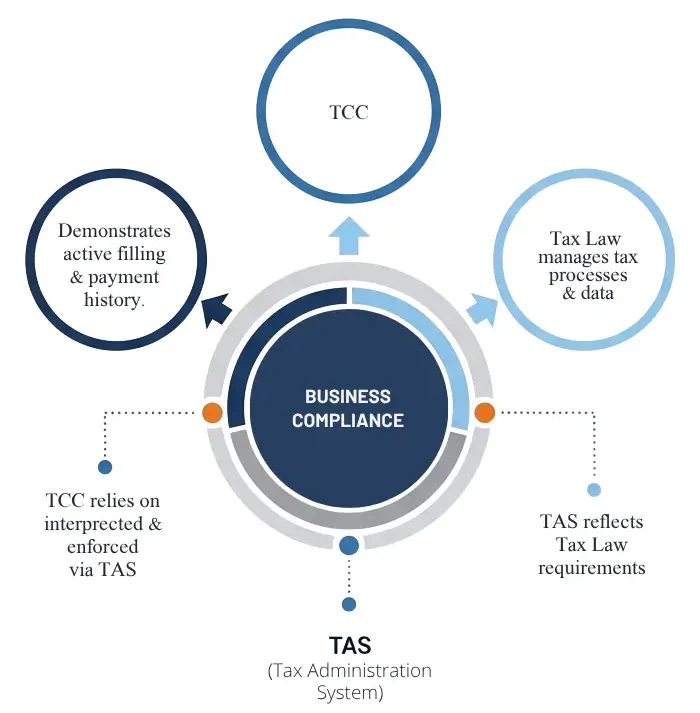
Tax compliance lifecycle and key reporting milestones in Turkey
Why Choose Celikel CPA for Accounting Services in Turkey?
- Licensed SMMM Firm: All services are supervised by registered public accountants certified by TÜRMOB, ensuring full regulatory compliance and direct accountability.
- Multilingual Coordination: We eliminate communication barriers by providing client updates, financial statements, and day-to-day coordination in English, Russian, or Turkish.
- Integrated Support: We unify your statutory bookkeeping, corporate tax, payroll outsourcing, and company formation needs under a single operating model.
- Digital-First Workflows: We use secure document portals, e-invoicing systems, and cloud-based file management to simplify monthly reporting cycles.
- Active Legislative Monitoring: We continuously monitor the Official Gazette, Revenue Administration announcements, and KGK rulings to keep your business ahead of regulatory updates.

Celikel CPA accounting team delivering precise financial solutions
References and Legal Sources
The accounting and reporting obligations summarized on this page are grounded in the following Turkish legislation and institutional frameworks:
- [1] Tax Procedure Law (Law No. 213) - bookkeeping obligations, valuation rules, inflation adjustment provisions, and penalty framework. View legislation
- [2] Public Oversight, Accounting and Auditing Standards Authority (KGK) - TFRS, BOBI FRS, and KUMI FRS guidance. Official portal
- [3] Revenue Administration (GIB) - e-Invoice, e-Ledger, e-Archive, and tax return filing infrastructure. GIB portal
- [4] Direct Foreign Investment Law (Law No. 4875) - legal framework for foreign-owned entities in Turkey.
- [5] Turkish Commercial Code (Law No. 6102) - corporate governance, reporting obligations, and audit thresholds. View legislation